Messner, Managed Instability, and the Russian Understanding of War
Personal author’s note:
I have spent the past weeks working on a project for a client. As part of that process, I returned once more to the writing and analysis of people such as Thede Palm, Gustave Le Bon, Evgeny Messner, Klemens von Metternich, Alexander Svechin and Ivan Ilyin, while also revisiting the work of Frank G. Hoffman and Olof Fridman regarding hybrid conflict and Russian strategic thinking.
I often find that one benefits from periodically returning to the fundamentals with a fresh notebook. This usually involves eating a whole lot of fish, something Jeeves would no doubt have appreciated, while re-reading the classics and revisiting older analytical frameworks. Somewhere in the middle of all this, I felt like sharing some topical idle meanderings down below.
-j
(20260524)
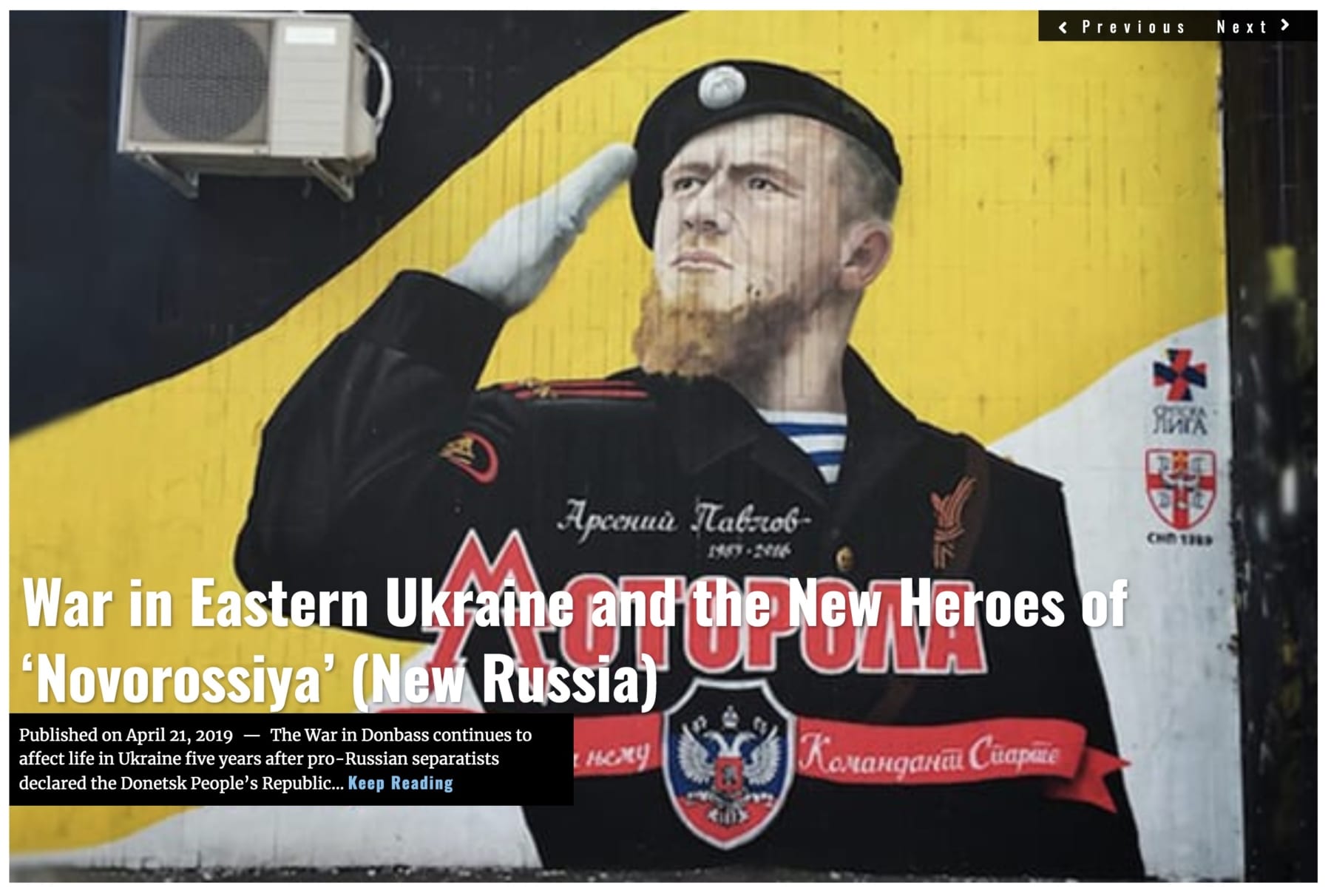
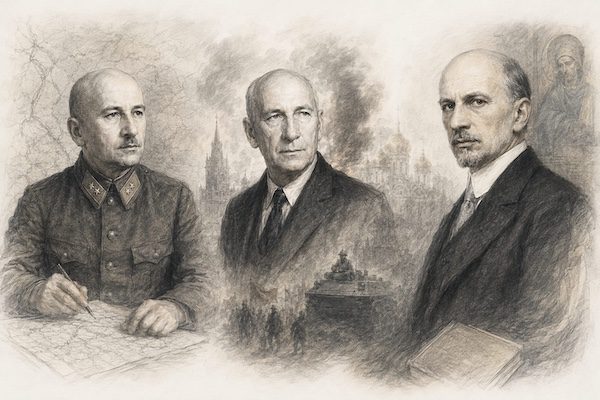
[Main image: Svechin: How to adapt. Messner: Where to fight. Ilyin: What to defend.]
When Conflict Becomes Atmosphere
Messner, Reflexive Control, and the Russian Continuity of War
Core Assessments:
- The Inversion of Clausewitz: Western strategic thinking traditionally approaches war as an episodic disruption to an otherwise polite state of peace. Russian strategic thinking conceptualises conflict differently. Conflict is treated not as an episodic escalation, but as a continuous condition embedded within political, societal, and existential life itself. The framework inverts Clausewitz: politics becomes the continuation of war through other means.
- The Dissolution of the Battlefield (Myatezhevoyna): Modern conflict is not confined to traditional military fronts or conventional operational theatres. National identity, historical memory, social trust, public institutions, and cultural life dissolve as civilian spaces and become part of the active battlespace itself.
- The Weaponisation of Perception (Reflexive Control): Rather than relying on kinetic force, reflexive control seeks to structure information flow, perception, and decision-making environments. This strategy manoeuvres an adversary toward predictable and disadvantageous reactions while preserving the illusion of strategic autonomy.
The Historical Dilemma
Russia has for centuries confronted a persistent structural dilemma: the central state’s ability to project authority naturally diminishes with distance. Power can be concentrated at metropolitan centres, yet history repeatedly demonstrates that force projection is often needed least at the centre and most at the periphery. Rebellions, separatism, insurgency (PDF link) and fragmentation tend to emerge far from the capital before gradually accelerating toward the political core. Geography, uneven administrative reach, repeated invasions, civil war and recurring fears of peripheral instability cultivated a governing culture deeply concerned with cohesion, control and survivability. Stability was never assumed. It had to be continuously constructed, projected and defended.
Strategic cultures rarely survive primarily through doctrine. More often they survive through atmosphere, instinct and inherited thinking. Russian strategic behaviour is therefore not merely improvised policy. It frequently reflects older governing logics shaped by recurring historical pressures.
Three figures approached this strategic condition from different directions. Alexander Svechin (17 August 1878 – 28 July 1938) approached it through strategy, arguing against universal formulas and insisting upon adaptation to circumstance. Ivan Ilyin (28 March 1883 – 21 December 1954) approached it philosophically. For him, Russia represented not merely a procedural state but a historical organism whose cohesion required preservation. Evgeny Messner (1891-1974) approached it through conflict and asked a different question: if political order becomes fragile, where exactly does conflict occur?
None of this suggests perfect strategic coherence or uninterrupted doctrinal continuity within the Russian state. The Russian strategic landscape remains fragmented, adaptive and frequently contradictory. Opportunism, improvisation, institutional competition and corruption coexist alongside strategic continuity. The purpose here is not to reduce Russian behaviour to a single explanatory model, but to examine one recurring framework through which conflict, cohesion and state survival have repeatedly been conceptualised. Strategic culture is tendency, not mechanical determinism.
The Intellectual Responses
Messner is often described as an early theorist of hybrid warfare or irregular conflict.
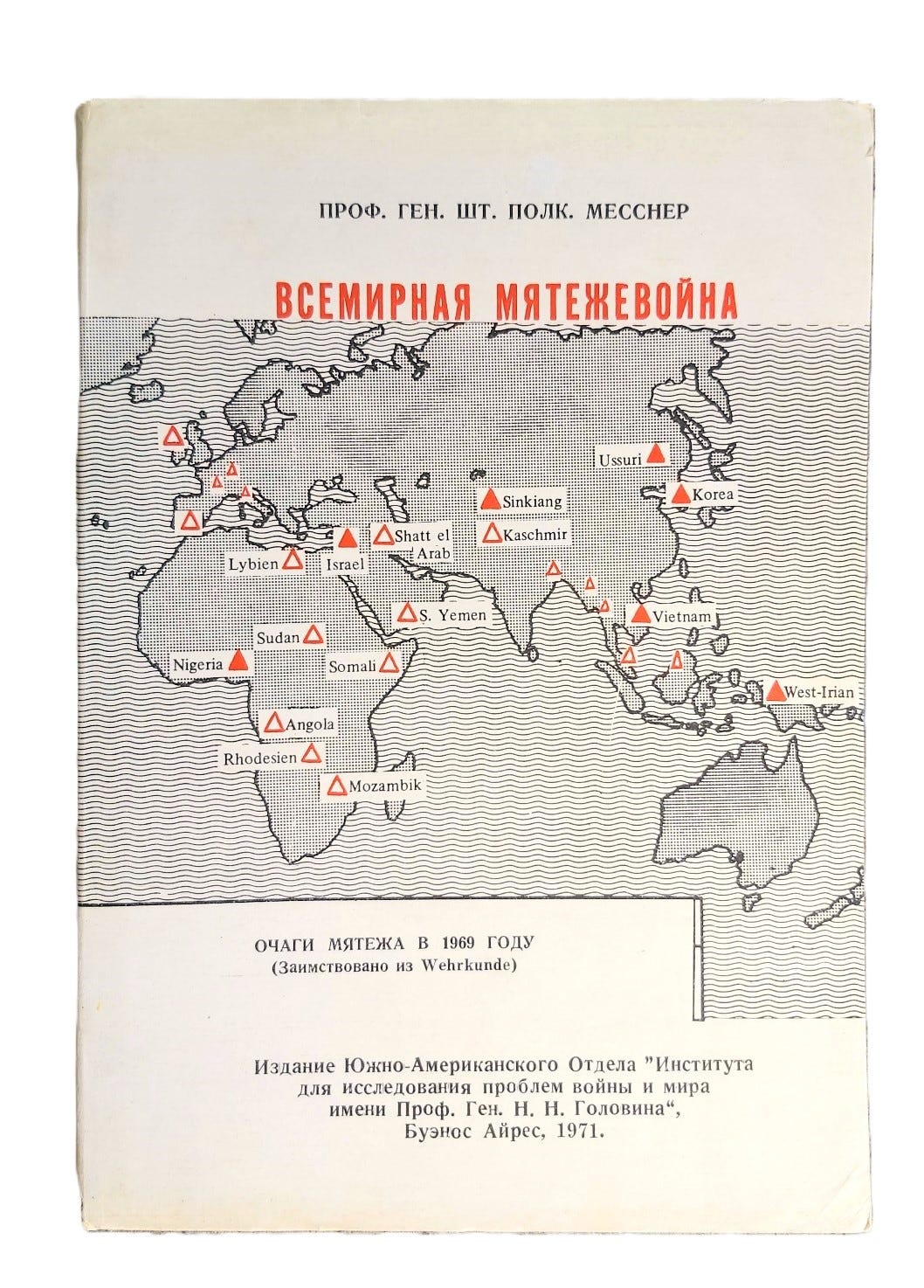
That understates the depth of his argument. His theory of Myatezhevoyna (Мятежевойна), subversion-war, was not fundamentally an argument about guerrillas, terrorism or unconventional warfare. It was an argument about the changing location of conflict.
Messner treated the distinction between war and peace as strategically obsolete.
The battlefield extended beyond armies and front lines into society. Morale, legitimacy, social cohesion, perception and political confidence mattered as much as military force. Conflict ceased being episodic and embedded itself within governance and society.
Classical power politics already treated friction, rivalry and strategic competition as permanent conditions of statecraft. Messner applied this permanence to modern political and societal realities. Conflict could no longer be confined to episodic diplomacy, military confrontation or balance-of-power politics. It extended into legitimacy, institutions, identity and societal coherence.
Conflict became tied to existential questions of continuity, cohesion and state survival.
Western strategic thinking traditionally approaches war as an episodic disruption to an otherwise polite state of peace. Prussian military theorist Carl von Clausewitz famously described war as the continuation of politics through other means: a temporary escalation subordinate to political objectives.
Russian strategic thinking approaches the strategic condition differently. Conflict is no longer merely episodic escalation but a continuous condition embedded within political, societal and existential life itself.
Under such conditions, the framework effectively inverts Clausewitz: Politics becomes the continuation of war through other means.
Within realist frameworks, prolonged competition and conflict may also function as mechanisms of strategic sorting. Institutions, political systems and governing elites are continuously tested under pressure, uncertainty, and crisis. Conflict therefore becomes not merely destructive, but also selective, revealing which structures retain cohesion, adaptability and operational capacity under sustained strain.
It is within this broader framework of politics and war as continuous competition that Russian strategic thinking has often operated.
“Politics is the continuation of war through other means.”
In this environment, Messner emerges as a synthesis of assumptions regarding continuity, conflict and state survival. These conditions produced mutually reinforcing responses from Svechin, Messner and Ilyin, combining strategic adaptation, expanded battlespace and societal cohesion into a mutually reinforcing strategic framework. Exceptional measures require narratives capable of sustaining mobilisation and cohesion. Those narratives then become instruments within wider structures of conflict and competition. The process becomes self-reinforcing.
From this perspective, Ilyin becomes useful not primarily as philosopher but as producer of cohesion. National myths create continuity and common identity. The truth of the national myth matters less than its functionality.
Ironically, many of these approaches emerged from a White émigré officer who viewed subversion-war primarily as a weapon used against Imperial Russia rather than as a future strategic condition for the Russian state.
Gibridnaya Voyna vs Myatezhevoyna
Gibridnaya voyna (гибридная война), Hybrid Warfare and Myatezhevoyna are frequently treated as interchangeable, yet the terms describe fundamentally different concepts.
The Western concept of hybrid warfare generally describes the coordinated use of multiple instruments: military force, cyber operations, information warfare, political influence, economic pressure, sabotage and irregular actors. The framework remains operational, focused on how different tools are combined within conflict.
Gibridnaya voyna, while overlapping operationally with Western hybrid warfare concepts, carries broader thinking inherited from Soviet and Russian strategic traditions. Political, informational, psychological, economic and military pressures operate simultaneously and continuously across society, often laying the groundwork long before overt confrontation emerges. Active measures (активные мероприятия), political warfare and reflexive control (рефлексивное управление) cease being supporting activities surrounding war and instead become expressions of conflict.
Influence operations, institutional penetration, perception management, information manipulation and managed instability emerge naturally from the same conflict environment. Influence networks operate through layered and mutually reinforcing structures rather than isolated actors. Messner approached the strategic condition differently. Myatezhevoyna dissolves the distinction between battlefield and society altogether. Institutions, narratives, historical memory, social cohesion and national identity cease being adjacent to conflict and become part of conflict’s operating environment.
Contemporary concepts such as reflexive control and cognitive warfare become easier to understand not as isolated innovations, but as operational expressions of a broader operating environment already visible within Myatezhevoyna.
Reflexive control seeks to shape an adversary’s decision-making environment so thoroughly that the adversary voluntarily arrives at predictable and disadvantageous conclusions while believing itself autonomous. The objective is not merely deception, but the seizure of initiative itself: forcing reactions, shaping responses and structuring political behaviour in advance. The target believes it controls its OODA loop while reacting inside a decision environment structured by the adversary.
As Paul T. Levin noted in his excellent 17 May 2026 text Taking the Fight to Putin, Russia attempts to gain what Russian intelligence operatives call “reflexive control” by “taking the initiative and forcing a response.”
Contemporary discussions increasingly describe aspects of this environment through the term ‘cognitive warfare’. Conflict aimed not merely at infrastructure or military capability, but at perception, legitimacy, institutional trust, emotional response and societal coherence.
Messner did not formulate these concepts in contemporary terminology. He did, however, describe the environment from which such methods emerge.
“Our enemies today need not attack our government to have a substantive strategic effect on our nation.” — General (Ret.) Keith B. Alexander, before the United States Senate Select Committee on Intelligence, March 30, 2017, regarding Russian Active Measures and Influence Campaigns.
The terminology may be new and cleaner. The underlying concepts are not.
Conflict expanded into the structures sustaining social order. Universities, bureaucracies, churches, media environments, intermediary organisations and cultural institutions matter not because they possess direct coercive power, but because they shape legitimacy, cohesion and perception.
Attacking civilian or economic targets may under such conditions become more effective than direct military confrontation, particularly through disinformation, influence operations and manipulation of information flow.
Strategic effects no longer require direct attacks. Pressure applied against social trust, legitimacy, economic activity or institutional confidence can produce destabilising political effects at considerably lower cost and risk.
Messner’s framework reduces politics, culture, identity and institutions into conflict terrain.
War therefore ceases to represent an event and instead becomes atmosphere. Not eternal war in the romantic sense, but eternal war in the administrative sense. Not permanent mobilisation. Permanent competition.
Instability therefore acquires a different meaning. Directed inward it represents disintegration. Directed outward it becomes an instrument. Managed instability constrains adversaries, weakens cohesion and shapes political behaviour without requiring decisive military confrontation. Concepts such as frozen conflict and managed democracy represent expressions of this logic rather than exceptions to it.
Gerasimov and New Generation Warfare
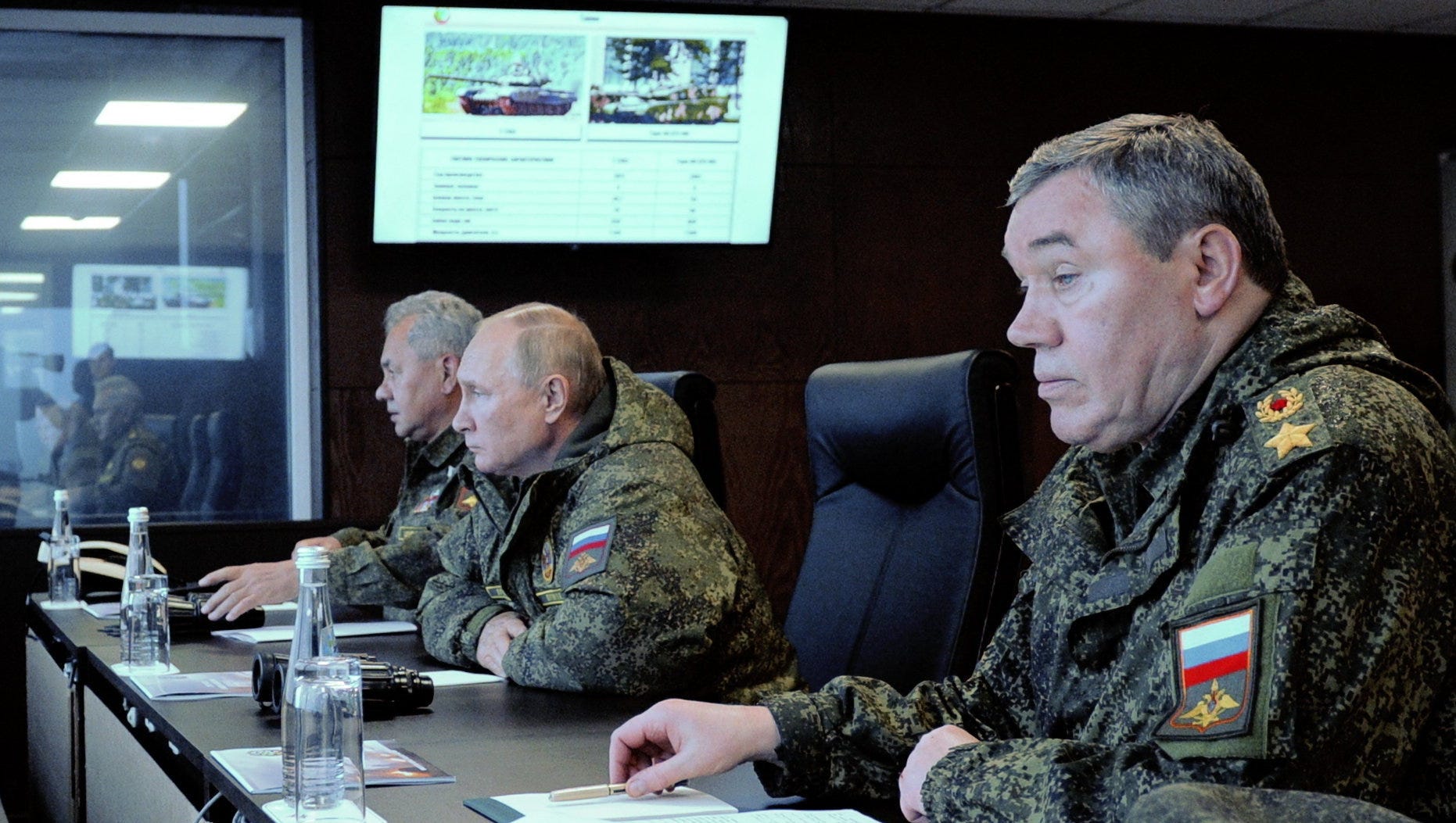
General Valery Gerasimov effectively reintroduced many of these atmospheric and conceptual approaches under the framework of “New Generation Warfare” in 2013[PDF link]. Gerasimov repackaged proven Russian approaches regarding political warfare, instability management and societal conflict into contemporary military doctrine language.
Operations in Georgia, Transnistria and elsewhere reinforced the utility of the approach. Russian strategy increasingly relies upon asymmetrical and societal conflict alongside conventional confrontation. Later operations only reinforced the pattern.
Western analysis often catalogues instruments while struggling with the mindset and architecture connecting them. Active measures are often treated as categories of activity rather than manifestations of a broader strategic condition.
The danger was never merely that Russia possessed unfamiliar tools. The danger was assuming they were merely tools.
Figures such as Svechin, Messner and Ilyin responded differently to recurring Russian conditions of fragile projection, contingent order and fears of internal fracture. Their ideas did not survive as doctrine. They survived instead as recurring approaches toward conflict, cohesion and state survival.
Strategic surprise rarely emerges from entirely new methods. More often it emerges from recognising too late that an adversary had been operating from a fundamentally different understanding of conflict.
The strategist who mistakes narrative instrument for objective reality eventually ceases to manipulate myth and instead becomes manipulated by it.
John Sjoholm, for LIMA CHARLIE WORLD
[Subscribe to our newsletter for free and be the first to get Lima Charlie World updates delivered right to your inbox.]
John Sjoholm is Lima Charlie’s Middle East Bureau Chief, Managing Editor, and founder of the consulting firm Erudite Group. A seasoned expert on the Middle East, North Africa, Europe and the Balkans, he has a background in security contracting and has served as a geopolitical advisor to regional leaders. He was educated in religion and languages in Sana’a, Yemen, and Cairo, Egypt, and has lived in the region since 2005, contributing to numerous Western-supported stabilisation projects. He currently resides in Jordan.
Lima Charlie World provides global news, featuring insight & analysis by military veterans, intelligence professionals and foreign policy experts Worldwide.
For up-to-date news, please follow us on twitter at @LimaCharlieNews
In case you missed it: