On Strategic Dependence in the Backwater of the Trump–Xi Meeting
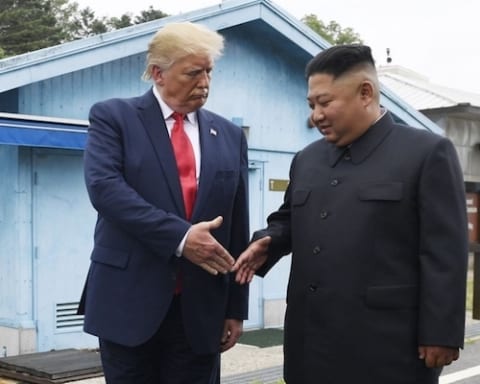
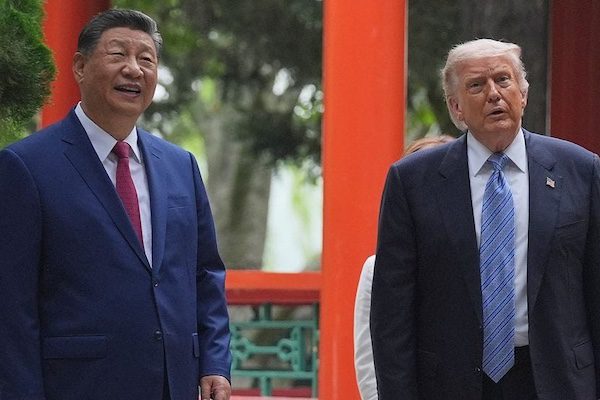
According to media reports, the United States is pausing parts of its weapons deliveries to Taiwan due to requirements coupled with production and logistical limitations within its military-industrial capability in light of the conflict with Iran. This comes in the wake of last week’s Trump–Xi meeting, during which Taiwan was reportedly among the topics discussed.
The recurring pattern is difficult to ignore. American systems and security availability become less predictable precisely when the security situation accelerates and becomes acute for the recipient. Ukraine experienced this dynamic, and Taiwan now appears to be encountering the same problem.
This is ultimately less about individual administrations and more about structural strain. When multiple crises converge, priorities are rapidly redistributed, and dependency thereby develops into a strategic vulnerability. The situation is hardly improved by the increasingly common tendency in Washington to use the latest conflict du jour as an instrument for domestic political posturing and positioning, further increasing friction within the international alliance network.
Security guarantees the United States projects itself as capable of providing are, in the end, only as credible as the willingness and ability to sustain them under pressure. This is a particular point that European consumers of security appear slow to internalise into the new strategic reality.
Dependency is a strategic vulnerability.
This recent development hardly contributes to restoring confidence ahead of any continued deepening of long-term dependency relationships tied to America’s strategic weight.
From a Stockholm perspective, this should reasonably be weighed very carefully in forthcoming major procurement and security policy decisions, not least the question of future rocket artillery systems.
This should also be contextualised in relation to Stockholm’s recent decision to procure naval defence equipment from France to the tune of $4.2 billion, as well as the French decision to increase procurement of Swedish defence materiel. Together, these developments provide additional support for the very real need for Europe to gradually reduce its strategic dependence on the United States and develop more autonomous European solutions. Stockholm and Paris possess strong potential to emerge as leading forces in such a development.
This trajectory also appears increasingly visible at the political level. France’s recently announced initiative to deepen strategic and nuclear dialogue with Sweden further reinforces the broader pattern of Stockholm and Paris moving toward a more autonomous European security architecture built around long-term continental capability rather than perpetual dependence on external strategic weight.
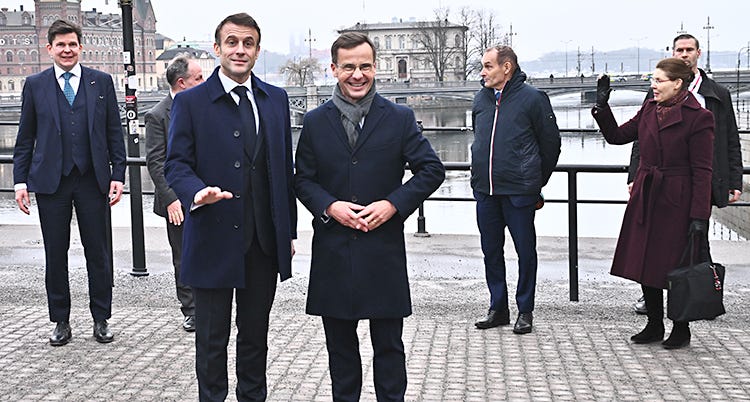
It is also difficult not to view the growing Swedish–French defence relationship as part of a broader European movement toward greater strategic autonomy. Paris, as usual, appears to be the adult within the European space and has long thought in such terms. The question is rather how quickly the rest of Europe chooses to follow.
John Sjoholm, for LIMA CHARLIE WORLD
[Subscribe to our newsletter for free and be the first to get Lima Charlie World updates delivered right to your inbox.]
John Sjoholm is Lima Charlie’s Middle East Bureau Chief, Managing Editor, and founder of the consulting firm Erudite Group. A seasoned expert on the Middle East, North Africa, Europe and the Balkans, he has a background in security contracting and has served as a geopolitical advisor to regional leaders. He was educated in religion and languages in Sana’a, Yemen, and Cairo, Egypt, and has lived in the region since 2005, contributing to numerous Western-supported stabilisation projects. He currently resides in Jordan.
Lima Charlie World provides global news, featuring insight & analysis by military veterans, intelligence professionals and foreign policy experts Worldwide.
For up-to-date news, please follow us on twitter at @LimaCharlieNews
In case you missed it:

![Blossoming Russo-Turkish alliance leaves U.S., NATO behind [Lima Charlie News]](https://limacharlienews.com/wp-content/uploads/2019/07/Russia-Turkey-alliance-leaves-U.S.-NATO-behind-480x384.png)