The balance of power in Lebanon may be shifting.
In a few days, I will again be involved in discussions with a Middle Eastern client on regional developments. Without disclosing anything sensitive, it is possible to outline the core analytical framework that underpins my advisory work in this case. Clients rarely pay for history lectures. They pay for interpretation, and ultimately for actionable guidance derived from that interpretation. The purpose of this piece is therefore not to provide a comprehensive history of Lebanon, but to explain the structural realities that shape what is, and is not, possible in the current environment.
The client’s preliminary questions reflect a growing sentiment observable across multiple policy circles. Hezbollah appears under pressure. Iranian influence is perceived to be weakening. Signals from within Lebanon are being interpreted as indications that the balance of power may be shifting. From this follows a familiar question: whether the present moment offers an opportunity to reshape Lebanon’s internal order.
This sentiment is not new. Lebanon periodically enters phases where external actors conclude that the internal balance may be altered through pressure, intervention, or accelerated political engineering. Hezbollah is described as weakened, Iran as constrained, and Beirut is spoken of as potentially recoverable. Such moments generate a familiar temptation in foreign capitals: to assume that pressure applied at the right point, with sufficient force and diplomatic cover, can alter the internal balance of a country that appears momentarily exposed.
This reading mistakes institutional form for operational authority.
CORE ASSESSMENTS:
- Lebanon does not function as a centralised state but as a polycentric authority system, where governance is exercised through overlapping actors rather than a single sovereign authority.
- Hezbollah functions not merely as a military organisation, but as an embedded governance ecosystem providing security, welfare, reconstruction, and administrative continuity.
- In fragmented political environments, weakening a governance actor without replacement capacity does not produce consolidation. It produces fragmentation.
- Power in Lebanon is therefore not removed through kinetic pressure. It is displaced through governance replacement.
IMMEDIATE RISK:
- Kinetic pressure against Hezbollah risks degrading embedded governance structures without introducing replacement capacity.
- This produces a multiple-vector vacuum: security deterioration, service collapse, administrative fragmentation, and financial disruption.
- Under such conditions, displacement becomes rational behaviour rather than exceptional response.
- Population movement into fragile neighbouring environments, particularly Syria, compounds instability and creates secondary leverage for regional actors.
STRATEGIC IMPLICATION
- Lebanon represents an intelligence and structural influence challenge rather than a kinetic military challenge.
- Long-term structural competition, governance replacement, and institutional penetration are required to alter the balance of power.
- Absent such replacement capacity, attempts at disruption risk reinforcing fragmentation, generating displacement, and creating leverage for actors willing to operate within instability.
- In Lebanon, durable influence accrues not to the actor capable of applying force, but to the actor capable of governing.
“Authority is the ability to secure obedience without resort to force.” — Bertrand de Jouvenel
(2) Lebanon as a Fragmented Authority System
Lebanon is not a weakened state awaiting restoration, nor a central authority temporarily obstructed by a subordinate armed actor. It is a fragmented authority system in which sovereignty exists formally, while power is exercised through parallel governance structures. Any attempt to act upon Lebanon without first understanding that structure will not produce consolidation. It will deepen fragmentation.
Most analysis of Lebanon proceeds from institutional assumptions that do not hold under fragmented political conditions. Observers identify ministries, borders, and formal authority structures and infer that governance follows from these arrangements. From this perspective, Lebanon appears as a weakened state whose central authority has been temporarily obstructed by armed actors, and which may therefore be restored through pressure, leadership decapitation, or external intervention. This approach assumes that authority flows from sovereignty and that the removal of disruptive actors allows institutional authority to reassert itself. In Lebanon, this assumption repeatedly produces flawed conclusions.
Lebanon does not function as a single authority. Power is distributed across sectarian, geographic, and militia-based structures, each governing its own domain and accumulating legitimacy through delivery rather than formal mandate. The result is a system of negotiated sovereignty and overlapping governance (a polycentric authority structure), where authority emerges from operational capacity rather than institutional form.
Beirut retains international recognition and procedural sovereignty, yet lacks the defining characteristics of a centralised authority. Beirut does not hold a monopoly on violence; it lacks the capacity for consistent force projection and struggles to provide force protection where parallel actors operate. Authority in Lebanon is therefore negotiated, not enforced.
(3) Narrative Framing and Strategic Misinterpretation
Israel has increasingly framed the current moment as an opportunity to “change the strategic equation in Lebanon.” This formulation is not merely descriptive. It is narrative construction designed to shape how Western decision-makers process Lebanese dynamics. The framing implicitly presents Hezbollah as a removable obstacle and Lebanon as a state awaiting restoration, encouraging external actors to assume that sufficient pressure can produce consolidation.
Such framing aligns with Israeli strategic interests. By positioning Hezbollah as the central obstacle to Lebanese state authority, the broader structural realities of Lebanon’s fragmented governance environment are obscured. The narrative encourages Western capitals to interpret Lebanon as a weakened state rather than a polycentric authority system, and to view military pressure as a mechanism for restoring central authority in Beirut. In doing so, Israel implicitly positions itself as the principal interpreter of regional dynamics, shaping the parameters Western policymakers perceive developments across the Shia crescent extending from Lebanon through Syria to Iran.
The foundational assumption embedded in this framing is that Hezbollah can be weakened through kinetic pressure alone, and that this weakening will shift the balance of power in favour of Beirut. This assumption rests on a misunderstanding of what Hezbollah is and how authority functions in Lebanon.
“War is not merely an act of policy but a true political instrument, a continuation of political intercourse, carried on with other means.” ― Carl von Clausewitz
(4) Hezbollah as Embedded Governance
Hezbollah is not merely a military structure. It is a societal and governance ecosystem. It emerged as a replacement for functions Beirut could not deliver, and over time this replacement structure has become embedded. Hezbollah provides security, welfare, reconstruction, dispute resolution, financial channels, and local governance. Its authority rests not primarily on arms, but on service provision and embedded legitimacy.
In such environments, military pressure aimed at individual actors does not produce consolidation. Removing leadership or degrading infrastructure does not remove governance where that governance is socially embedded. Authority persists because it is rooted in service provision, local legitimacy, and operational continuity rather than hierarchical command. Attempts to reshape Lebanon through kinetic means therefore misunderstand the nature of power within fragmented systems. Structural change occurs not through disruption alone, but through the gradual displacement of one governance structure by another capable of delivering stability, services, and continuity.
This structural reality becomes most visible when examining Hezbollah. It is frequently described as a militia, a proxy, or an armed actor operating alongside the Lebanese state. This framing is analytically insufficient. Hezbollah does not merely operate within Lebanon. It governs within Lebanon.
Over time, Hezbollah has constructed an embedded governance ecosystem that operates parallel to, and in some areas instead of, Beirut. It provides security, reconstruction, healthcare, financial assistance, dispute resolution, and administrative continuity in areas where central authority is limited or absent. This is not simply influence. It is governance exercised through non-state structures that accumulate legitimacy through delivery.
This distinction is operationally decisive. Military organisations can be weakened through leadership decapitation and infrastructure degradation. Embedded governance structures are more resilient. Leadership is replaceable. Networks are decentralised. Service provision continues. Authority persists because it is socially embedded rather than hierarchically imposed.
Weakening Hezbollah therefore does not automatically strengthen Beirut. In fragmented systems, pressure applied to one authority does not produce consolidation unless another authority is capable of replacing it. Where replacement capacity does not exist, pressure instead reinforces fragmentation. In Lebanon, this dynamic has repeated itself across decades. Authority shifts, actors weaken or strengthen, but the polycentric structure persists.
Hezbollah therefore functions less as an obstacle to Lebanese state authority and more as a substitute for it. This is the central dilemma facing external actors. Kinetic pressure may alter the balance between actors, but it does not resolve the underlying structure. Without a governance alternative capable of replacing Hezbollah’s operational role, fragmentation remains the defining feature of Lebanese political reality.
“You have your Lebanon and I have my Lebanon.” — Khalil Gibran
(5) Polycentric actors
“We have no eternal allies, and we have no perpetual enemies. Our interests are eternal and perpetual, and those interests it is our duty to follow.” ― Lord Palmerston
The polycentric nature of Lebanon becomes clearer when the country is examined as a set of overlapping governance ecosystems rather than a unified state. Authority is distributed across distinct spheres defined by geography, sectarian identity, and operational capacity. These actors do not merely compete for influence; they provide primary governance within their respective domains.
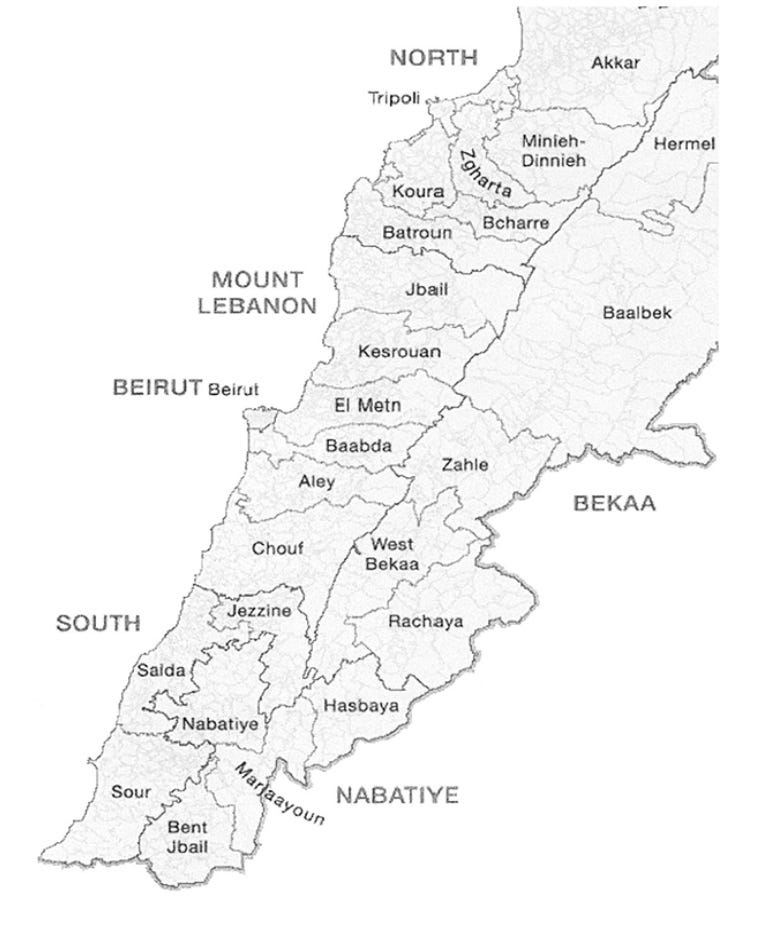
(5.1) Embedded Governance Authority
Hezbollah — Southern Lebanon, Bekaa Valley, Southern Beirut
Hezbollah operates as the most cohesive governance actor outside Beirut. Its authority is rooted in long-term service provision, reconstruction capacity, and security delivery. Parallel welfare structures, dispute resolution mechanisms, and logistical networks sustain its legitimacy. In these regions, Hezbollah functions less as a militia and more as an embedded governing authority, making it structurally resilient to external kinetic pressure.
(5.2) Institutional Continuity Authority
Maronite Political Networks — Mount Lebanon and Northern Christian Regions
Maronite political structures maintain governance through party networks, municipal control, and diaspora-linked economic systems. Authority is fragmented across factions but remains cohesive at the community level. These regions retain administrative continuity independent of Beirut, supported by private-sector capacity and longstanding international connections.
(5.3) Cohesive Micro-Authority
Druze Leadership — Chouf Mountains and Druze Heartland
The Druze regions represent one of Lebanon’s most internally cohesive political environments. Leadership structures maintain strong community alignment through patronage networks, political discipline, and local security arrangements operating with substantial autonomy from Beirut. Authority here is compact, cohesive, and locally embedded.
(5.4) Distributed Urban Authority
Sunni Networks — Tripoli, Sidon, West Beirut
Sunni political authority is less centralised but remains influential through commercial, religious, and municipal networks. Governance capacity fluctuates, but authority persists through business elites, religious institutions, and traditional political families. Authority in these areas is diffuse, yet operationally significant.
(5.5) External Constraint Authority
International Actors and Beirut
Lebanon’s governance environment is further shaped by external actors, including international financial institutions, diplomatic coalitions, and multilateral organisations. These actors influence economic policy, fiscal stability, and institutional reform. Their authority is indirect but structurally significant, defining the operational limits within which Lebanese actors function.
Taken together, these spheres illustrate that Lebanon does not function as a centralised state. Beirut retains formal sovereignty, but operational authority is distributed across overlapping governance ecosystems.
This has direct implications. Weakening a single actor does not produce consolidation unless another actor possesses the capacity to replace its governance functions. In Lebanon, no single actor currently holds replacement capacity across multiple spheres. Pressure therefore alters balances within the system, but does not change the structure itself.
Fragmentation in Lebanon is therefore structural rather than temporary.
“The test of policy is how it ends, not how it begins.” — Dr Henry Kissinger
(6) Analytical Misconception and Framework
To approach Lebanon, one must begin from a single operational insight: authority does not derive from formal sovereignty, but from the ability to shape and sustain operational reality. Lebanon illustrates this with particular clarity. Beirut retains international recognition, ministries, and formal sovereignty, yet authority is exercised across parallel governance ecosystems. Hezbollah governs territory and delivers services. Maronite regions maintain institutional continuity. The Druze heartland operates as a cohesive micro-authority. Sunni urban centres function through commercial and religious networks. Lebanon therefore operates as a distributed authority system where sovereignty is formal, but legitimacy flows from delivery.
From a realpolitik perspective, attempts to weaken Hezbollah through military pressure misunderstand the nature of power in Lebanon. Military force can degrade leadership and infrastructure, but it does not replace governance. Authority persists because the conditions that produced Hezbollah persist: state absence, service gaps, and local security requirements. Unless another actor replaces Hezbollah’s governance functions, the structure remains intact. Military pressure alters conditions without altering structure. Only governance replacement changes the operational balance. In Lebanon, no actor currently possesses that capacity. Similar dynamics have been observed in Iraq following the dismantling of Ba’athist administrative structures, where governance removal without replacement produced fragmentation rather than consolidation.
To address this structural reality, I approach Lebanon through what I define as a Realpolitik Structural Soft Power Doctrine. The concept builds upon the original formulation of soft power introduced by Joseph Nye, but hardens and modernises it for fragmented political environments where authority is contested and governance is uneven. Within this doctrine, influence is not derived from attraction, but from the deliberate shaping of operational reality through governance, institutional development, service provision, infrastructure, education, elite cultivation, and long-term administrative presence.
This doctrine does not imply dominion in a classical sense. Authority in fragmented environments develops through governance stabilisation, institutional maturation, and administrative continuity rather than overt control. The objective is not occupation, but the gradual construction of governance ecosystems capable of replacing competing authority structures. In Lebanon, this would mean replacing governance where it is currently provided by non-state actors, strengthening institutions where they are absent, and creating legitimacy through delivery rather than coercion.
When this framework is applied, the current discourse surrounding Lebanon becomes misplaced. Stabilisation and the reduction of Iranian influence cannot be achieved through kinetic pressure alone. The viable path is long-term structural competition through governance, service provision, and institutional penetration. In fragmented environments, authority accumulates through delivery rather than coercion. Any actor seeking to reshape the balance of power must therefore replace governance capacity rather than degrade it.
Structural competition in fragmented environments is slow, politically constrained, and resource-intensive. These constraints do not invalidate the approach; they define the cost of structural change.
(7) The Multiple-Vector Vacuum and the Calculus of Managed Instability
If Hezbollah is degraded without the emergence of replacement governance capacity, structural fragmentation follows rather than consolidation. Hezbollah functions not merely as an armed actor, but as an embedded authority ecosystem providing security, welfare, reconstruction, dispute resolution, financial channels, and administrative continuity across regions where Beirut’s authority remains limited. When such a structure weakens, disruption does not occur along a single axis but across multiple domains simultaneously, creating a multiple-vector vacuum.
Security becomes uncertain. Service provision deteriorates. Administrative continuity fractures. Financial assistance networks weaken. Local dispute resolution mechanisms disappear. These vectors do not operate independently; they reinforce one another, producing systemic uncertainty across populations dependent on embedded governance. Under such conditions, displacement is not an exceptional outcome. It becomes rational behaviour. Populations do not move solely in response to violence. They move in response to uncertainty, service collapse, and the absence of predictable authority. When governance continuity weakens across multiple vectors, movement accelerates.
(7.1) The Syrian Basin and Regional Reverberation
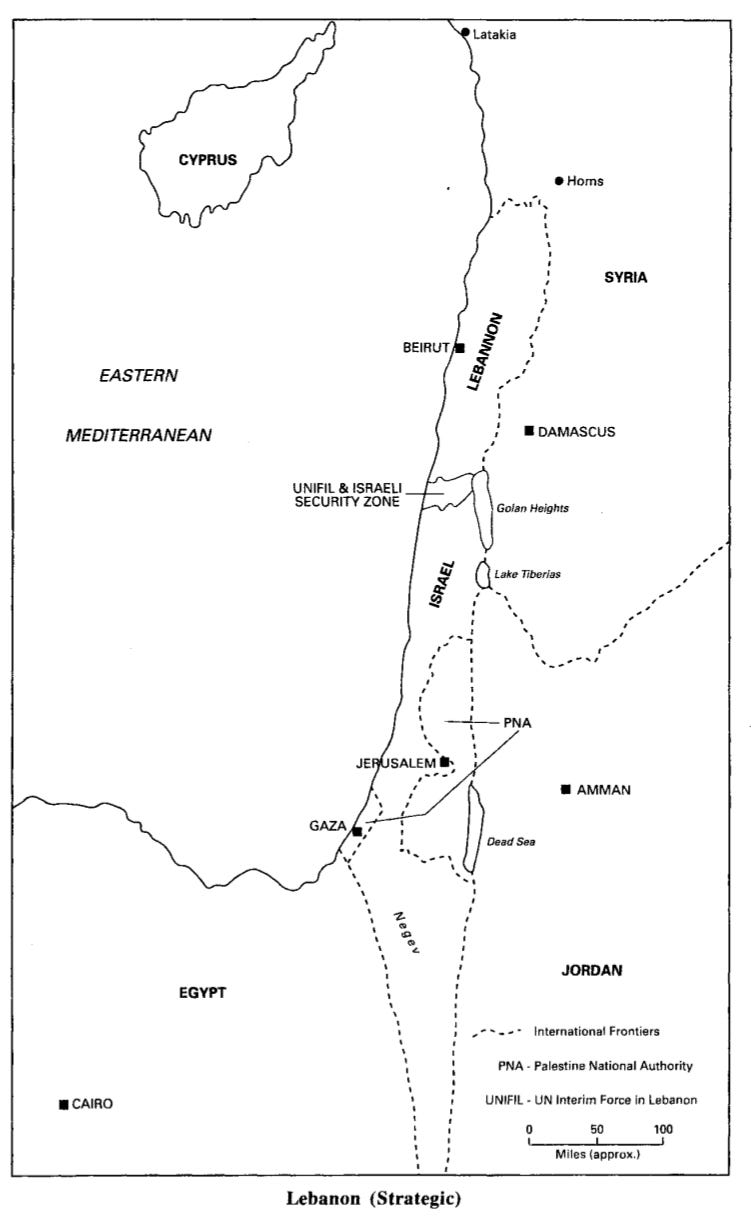
The Lebanese–Syrian border functions as a membrane rather than a wall. Under governance stress, population flows become automatic rather than exceptional. A destabilised southern Lebanon or Bekaa Valley therefore generates immediate pressure toward Syrian border regions already characterised by fragmented authority, unresolved displacement, and limited administrative capacity.
Movement into fragile environments does not stabilise them. It strains governance capacity, intensifies competition over resources, and further fragments administrative continuity. Displacement therefore compounds instability rather than dispersing it.
The result is regional reverberation. Lebanon destabilises Syrian border areas. Syrian fragility amplifies displacement. Movement becomes sustained rather than temporary. Over time, this produces a standing reservoir of instability, one that does not require deliberate orchestration to become operationally useful. Once populations are in motion, displacement becomes structurally difficult to reverse but comparatively easy to exploit.
At this stage, displacement ceases to be solely humanitarian. It becomes operational.
(7.2) Displacement as Secondary Leverage
Human suffering scales efficiently when it is managed. In fragmented political environments, displacement becomes a low-cost, high-leverage instrument for actors capable of tolerating instability and exporting its consequences.
A multiple-vector vacuum in Lebanon would generate secondary leverage across several actors operating within the Levantine environment.
For the Resistance Axis, displacement functions as a pressure valve. Movement toward Syria, the Eastern Mediterranean, and onward migration routes exports the consequences of governance collapse beyond Lebanon’s borders. The resulting instability reinforces a structural narrative: attempts to weaken Hezbollah produce fragmentation rather than consolidation. Hezbollah does not need to secure battlefield victory to retain relevance. It needs only to ensure that the alternative to its governance appears more unstable than its continuation.
The Syrian administration, regardless of its internal configuration, inherits a geography historically shaped by displacement dynamics. Damascus therefore has a history of treating population movement as a bargaining instrument. Cross-border displacement from Lebanon would create conditions in which permeability becomes negotiable, allowing pressure to be increased or reduced in response to external incentives. Humanitarian management becomes policy leverage. Displacement becomes a currency in negotiations over reconstruction, sanctions, and diplomatic engagement.
Israel, while pursuing the tactical degradation of Hezbollah, would operate within a battlespace altered by population movement and administrative fragmentation. Displacement complicates governance, strains institutional capacity, and fragments international coordination. The resulting environment shifts external attention toward managing humanitarian consequences rather than addressing structural governance absence. The tactical objective may remain degradation. The operational environment becomes instability.
These actors do not require coordination to benefit from displacement. Fragmented systems generate opportunities independently. Once displacement begins, leverage emerges organically.
(7.3) Structural Asymmetry and Managed Instability
The effectiveness of displacement as leverage depends on structural asymmetry. Actors capable of tolerating instability gain operational flexibility. Actors seeking consolidation absorb cost.
Population movement imposes administrative, fiscal, and political obligations on receiving systems. Courts intervene. Media amplifies. Municipal governance strains. Coalition politics fracture. These pressures emerge internally, while the enabling actor remains external to consequence.
This produces managed instability. The actor generating disruption retains flexibility. The actor seeking stability disciplines itself.
(7.4) The Operational Implication
A kinetic-only strategy aimed at weakening Hezbollah therefore risks producing the opposite of its intended effect. The degradation of governance capacity without replacement creates a multiple-vector vacuum. In the Levant, such vacuums do not remain empty. They are absorbed into regional instability patterns and gradually converted into leverage.
Power in Lebanon is not removed through pressure. It is displaced. When displacement manifests as sustained population movement, instability becomes an instrument rather than a by-product. The actor generating disruption absorbs tactical flexibility. The receiving system absorbs structural cost.
Any strategy that prioritises the destruction of governance without replacement risks creating a pressure mechanism that ultimately operates against the stabilising actor.
“You cannot stop an idea with a bullet.” — Napoleon
(8) The Operational Conclusion — The Replacement Mandate
Lebanon is not a kinetic military challenge. Force is a wasting asset. It is an intelligence and structural influence challenge. Hezbollah’s authority is not sustained solely through military capability, but through embedded governance: welfare provision, reconstruction, dispute resolution, financial assistance, and administrative continuity. Degrading leadership or infrastructure does not remove these functions; it creates unmet demand for governance.
In a polycentric system, removing one authority without replacement capacity does not produce consolidation. It produces fragmentation. Service provision deteriorates, administrative continuity weakens, and local security arrangements fracture. The result is a multiple-vector vacuum in which instability becomes structurally embedded rather than temporarily induced.
Such instability rarely remains contained. Disruption in Lebanon generates displacement into fragile neighbouring environments, particularly Syria, where additional pressure compounds existing governance deficits. Population movement then creates secondary leverage for actors capable of operating within instability, while the stabilising actor absorbs the political, financial, and administrative cost.
Engaging Hezbollah primarily through kinetic pressure therefore produces tactical degradation at the expense of long-term strategic stability. The costs are immediate. The strategic gains are limited and temporary. The structural outcome favours fragmentation. In Lebanon, durable power accrues not to the actor capable of applying force, but to the actor capable of governing.
John Sjoholm, for LIMA CHARLIE WORLD
[Subscribe to our newsletter for free and be the first to get Lima Charlie World updates delivered right to your inbox.]
John Sjoholm is Lima Charlie’s Middle East Bureau Chief, Managing Editor, and founder of the consulting firm Erudite Group. A seasoned expert on the Middle East, North Africa, Europe and the Balkans, he has a background in security contracting and has served as a geopolitical advisor to regional leaders. He was educated in religion and languages in Sana’a, Yemen, and Cairo, Egypt, and has lived in the region since 2005, contributing to numerous Western-supported stabilisation projects. He currently resides in Jordan.
Lima Charlie World provides global news, featuring insight & analysis by military veterans, intelligence professionals and foreign policy experts Worldwide.
For up-to-date news, please follow us on twitter at @LimaCharlieNews
In case you missed it: