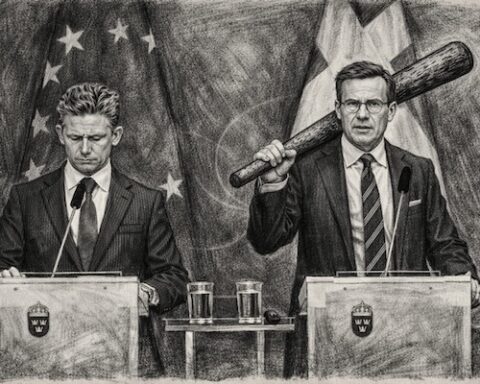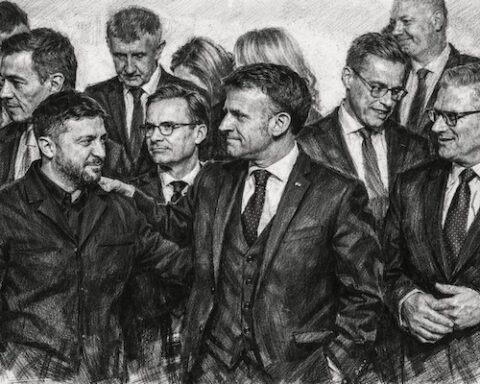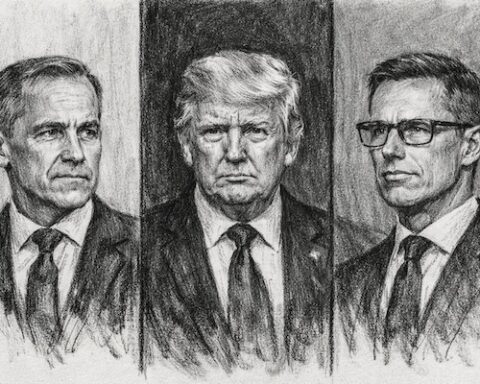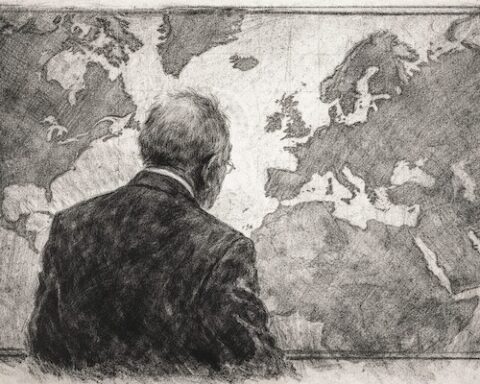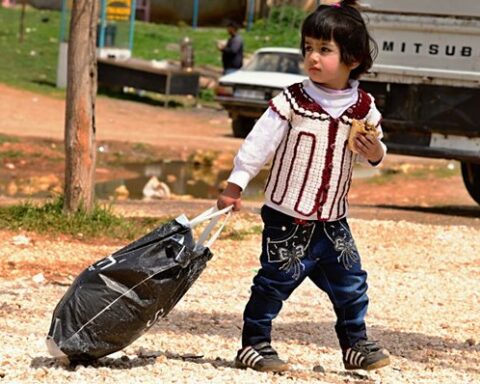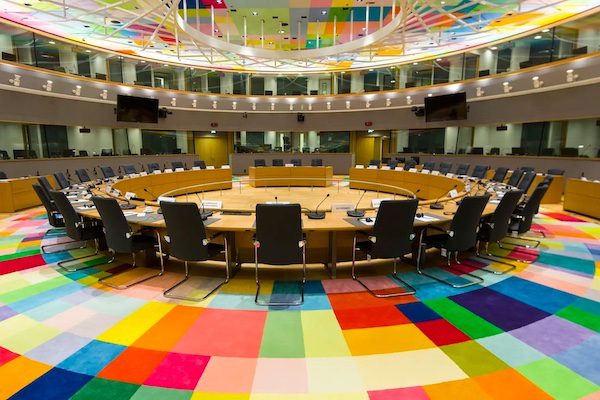
The Russia-Ukraine conflict endures not because it’s strategically complex, but because it’s strategically convenient. As long as European security is underwritten elsewhere, Russia remains a problem that could be managed at arm’s length. But the truth beneath the rhetoric is simpler and colder: Europe must outsource violence deliberately if it wishes to preserve itself intact.
Vulgus vult decipi; ergo decipiatur: Statecraft and the Management of Illusions
“Die Politik ist die Lehre vom Möglichen.” — Otto von Bismarck
During my decades working in the Middle East, it was not unusual for people to tell me that the West had come to the region to steal its oil and eradicate its population. I always found the belief revealing. Not because it was hostile, but because it fundamentally misunderstood how power operates. If eradication had ever been the objective, there would have been no ambiguity, no endless diplomacy, no regional bargaining. It would not have been a political debate but a logistical exercise. The reason the region still exists is not resistance, but irrelevance to such an aim. Survival in international politics is often granted not by strength, but by disinterest. People are not spared because they matter, but because they do not.
That same misunderstanding shapes much of the discourse around Russia and Ukraine. The conflict endured not because it was strategically complex, but because it was strategically convenient. As long as European security was underwritten elsewhere, Russia remained a problem that could be managed at arm’s length, absorbed into an abstract narrative of “Western” responsibility and sold back to European publics as moral posture rather than strategic necessity. Europe grew accustomed to existing beneath a security architecture it neither controlled nor paid for. That architecture has weakened, and what remains beneath it is not stability, but habit.
Europe must therefore decide whether it intends to remain a consumer of security or finally become its producer. That choice requires a significant increase in European investment in the Ukrainian frontier over the coming years, not as aid, but as infrastructure. Ukraine is no longer a theatre of sympathy. It is the forward edge of Europe’s security architecture.
If Europe is serious about containing, constraining, and ultimately bankrupting Russia as a destabilising power, the perimeter cannot remain static. A static frontier invites pressure. A frontier without depth invites penetration. A viable security order requires expansionary capacity, sustained pressure, and the credible willingness to widen the field of contestation so that Moscow cannot dictate tempo, geography, or escalation. Frontiers that cannot expand are not frontiers at all. They are targets.
Recent strategic doctrine has made another reality explicit. European security is no longer conceived elsewhere as a permanent obligation, but as a conditional arrangement subject to cost, relevance, and domestic tolerance. This is neither betrayal, nor hostility. It is strategy. Europe’s error is not that external priorities have shifted, but that it continues to behave as though they have not.
The United States no longer occupies a decisive position in European security, though it remains theatrically prominent. Its elections, personalities, and fluctuations continue to dominate public attention, and this fixation performs a useful function. While discourse revolves around external drama, structural dependence can be dismantled without announcement. Power does not emancipate itself through declaration. It simply arranges affairs so that former centres cease to matter.
Europe has spent decades exporting ethos and pathos as substitutes for power. Values were articulated, norms rehearsed, principles elevated into performance. This produced legitimacy in appearance, but not capacity in fact. Ethos became a spectacle. Pathos became a product. Both were consumed domestically and exported abroad as proof of civilisation. What was neglected was the harder discipline of statecraft: the quiet alignment of force, finance, and geography toward outcome.
In modern Europe, the polis of citizens functions primarily as an audience and a consumer. Ethos and pathos are its commodities. Political legitimacy is staged, rationalised, and sold. Statecraft proceeds elsewhere, insulated from sentiment, accountable only to result.
“Savoir dissimuler est le savoir des rois.”
— Cardinal de Richelieu
The European voter is not a participant in statecraft; they are its market. For the public, politics must remain intelligible. For statecraft, it must remain effective. These requirements are not compatible, and they are not meant to be. A society raised on sentiment cannot be trusted with consequence.
Ukraine appears as a cause to the consumer. In practice, it is an instrument of statecraft. The cause supplies the necessary ethos through which a frontier can be purchased. If Russia is decisively defeated, territory can be reconfigured into a perimeter of states, some already existing, others yet to be carved from geography not politically awake, and weaponised for European stability. This is not a moral project. It is the economics of power.
Europe will not pay Ukrainian pensions. It will pay for Ukrainian ammunition.
Europe’s future is therefore not to send its own sons to die, but to arm and sustain a ring of states whose continued existence produces European security. This will be described to the public in the language of solidarity, reconstruction, and values.
But the truth beneath the rhetoric is simpler and colder: Europe must outsource violence deliberately if it wishes to preserve itself intact.
Statecraft is not an act of consensus. It is power applied. It proceeds quietly, through decisions taken without spectators and justified only by outcome. Those who speak of values are permitted to admire the process from a distance. Those who manage outcomes will continue to decide the world. This division is not temporary. It is structural.
Europe has never been richer than it is now. It should remember what wealth has always been for.
[Author’s note: Vulgus vult decipi; ergo decipiatur: Statecraft and the Management of Illusions builds directly on the argument developed in Toute vérité n’est pas bonne à dire: Purchased Frontiers. The first examined the economic logic of European security and the necessity of agency in its preservation. This continuation addresses its political and psychological architecture. Both ask the same question from different angles: not what Europe believes itself to be, but how it actually preserves itself.]
John Sjoholm, for LIMA CHARLIE WORLD
[Subscribe to our newsletter for free and be the first to get Lima Charlie World updates delivered right to your inbox.]
John Sjoholm is Lima Charlie’s Middle East Bureau Chief, Managing Editor, and founder of the consulting firm Erudite Group. A seasoned expert on the Middle East, North Africa, Europe and the Balkans, he has a background in security contracting and has served as a geopolitical advisor to regional leaders. He was educated in religion and languages in Sana’a, Yemen, and Cairo, Egypt, and has lived in the region since 2005, contributing to numerous Western-supported stabilisation projects. He currently resides in Jordan.
Offline References:
[1] https://johnsjoholm.substack.com/…/toute-verite-nest…
[2] https://quincyinst.org/…/the-future-of-european-security/
[3] U.S. National Security Strategy, 2025.
[4] https://www.svd.se/…/danmark-pekar-ut-usa-som-hot…
[5] https://www.politico.eu/…/europe-thinks-the…/
[5] https://www.theatlantic.com/…/german-militarism…/684951/
[6] https://carnegieendowment.org/…/geopolitics-and…
[7] https://dominiccummings.substack.com/…/1-on-bismarck…
[x] Jonathan Steinberg, “Bismarck: A Life”
[x] Harold Nicolson, “Peacemaking 1919”
[x] Martyn Rady, “The Habsburgs”
[x] Dr Henry Kissinger, “A World Restored”
[x] Wolfram Siemann, “Metternich: Strategist and Visionary”
Lima Charlie World provides global news, featuring insight & analysis by military veterans, intelligence professionals and foreign policy experts Worldwide.
For up-to-date news, please follow us on twitter at @LimaCharlieNews
In case you missed it: