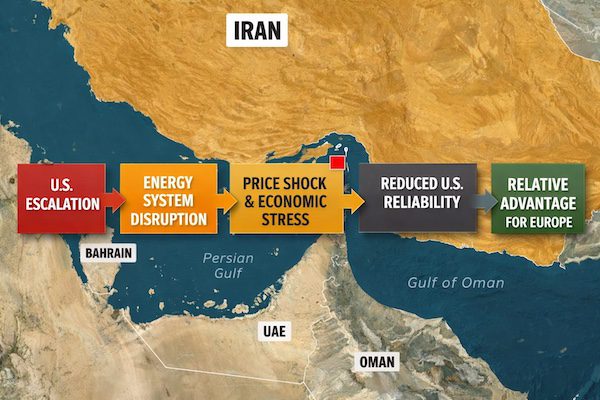
U.S. strikes on Iranian infrastructure are unlikely to achieve compliance goals. The more probable response is indirect escalation through asymmetric means, calibrated to impose cost without inviting immediate, decisive retaliation.
This is a working hypothesis informed by conversations with clients over the past two weeks. It does not rely on privileged insight, but on a reading of incentives and emerging patterns. The analysis is my own.
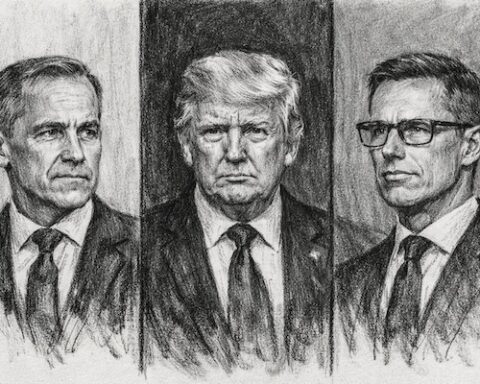
The current dynamic is anchored in a very explicit escalation signal. Donald J. Trump has issued a 48-hour ultimatum demanding that Iran fully reopen the Strait of Hormuz “without threat”, warning that failure to comply will result in strikes against Iranian power infrastructure.
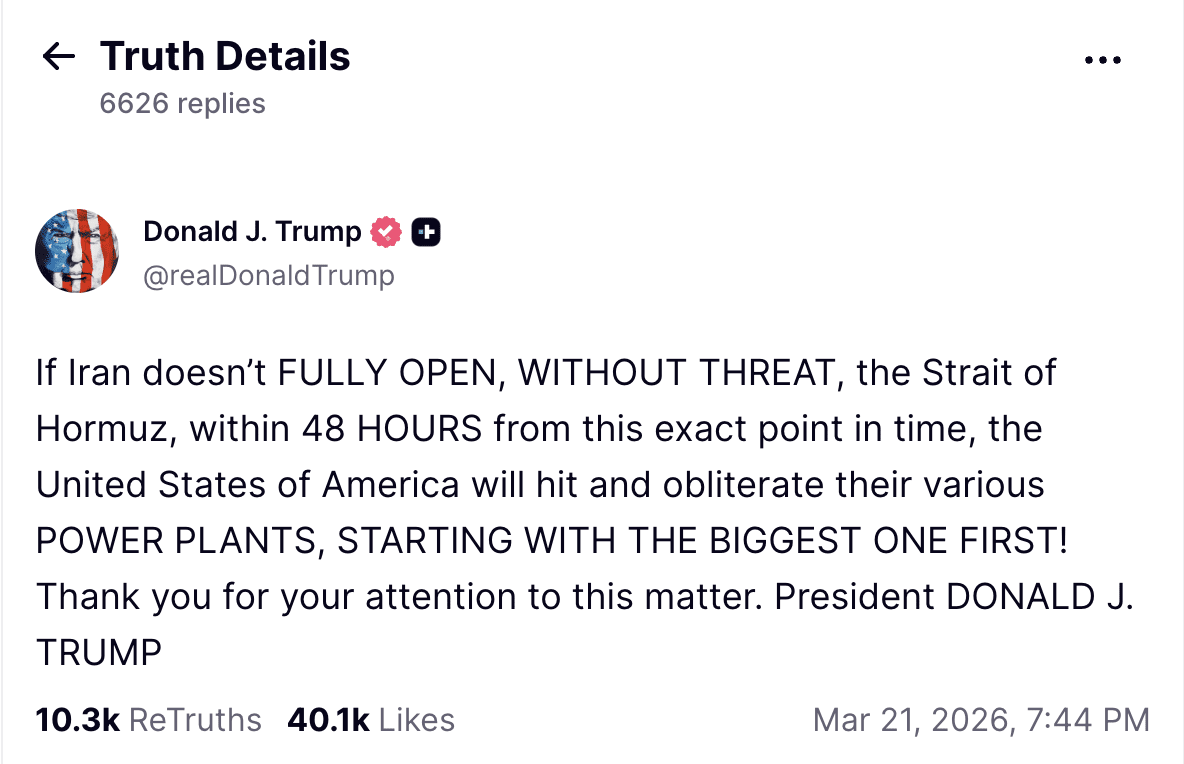
Framed in this manner, the demand does more than apply pressure. It constrains the available response. Compliance under a public ultimatum of this kind would carry a visible cost in deterrent credibility, both externally and domestically. Within that framework, Tehran’s room to manoeuvre narrows sharply. The outcome is not predetermined, but the structure of the communication makes non-compliance the more probable path — not because it is economically rational, but because it is politically and strategically sustainable. The escalation pathway is therefore not incidental. It is embedded in the form of the demand itself.
From that point, the sequence becomes relatively straightforward. If Washington proceeds with strikes on Iranian infrastructure, compliance remains unlikely. Under overt coercion, submission carries a higher long-term cost than refusal. The more probable response is indirect escalation through asymmetric means, calibrated to impose cost without inviting immediate, decisive retaliation.
Under such conditions, Iranian retaliation is unlikely to be directed at the United States in a conventional sense. The more probable path is the systematic targeting—directly or through proxies—of Gulf Arab energy infrastructure and maritime flows. This is where Iran holds leverage: not against the United States as a military actor, but against the system that underwrites its position.
That leverage operates through disruption rather than confrontation. Pressure on Gulf production nodes, interference with shipping lanes, proxy activity, and the introduction of persistent uncertainty across a tightly coupled system are sufficient to degrade stability at scale. Attribution may be partial or contested. The effects will not be.
This is the point at which a regional confrontation transitions into systemic risk.
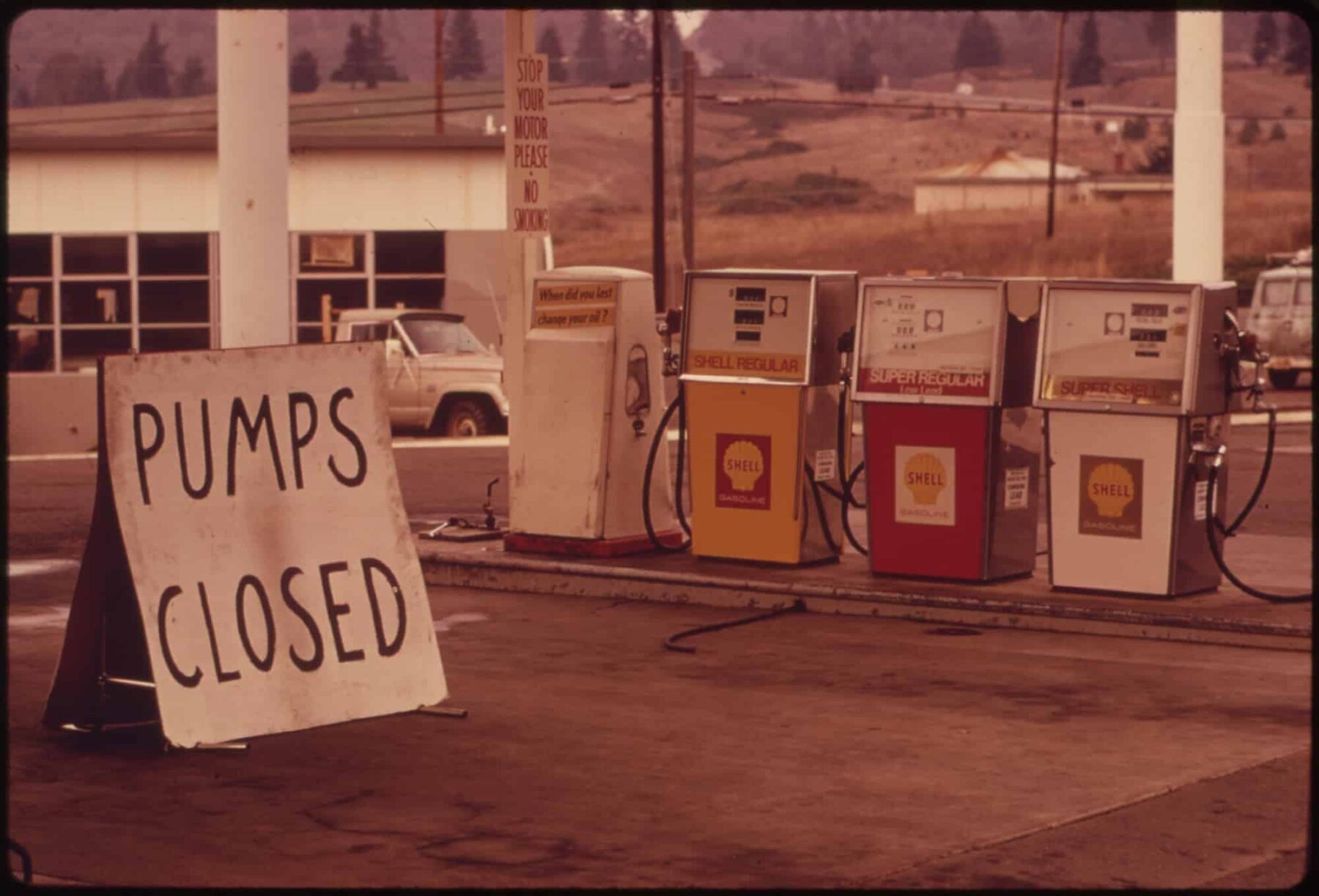
The 1973 oil crisis remains a useful reference, not because the conditions are identical, but because it illustrates how energy can function as a geopolitical transmission mechanism. That shock was politically controlled; supply was restricted deliberately and could, in principle, be restored. What is now at risk is structurally different. Physical disruption of infrastructure, or even credible and repeated threats against it, cannot be reversed at will. Markets do not price supply alone; they price reliability. Once reliability is questioned, volatility becomes structural.
Under such conditions, oil ceases to behave as a conventional commodity and instead operates as a vector of instability. Price increases are no longer linear responses to supply constraints but reflections of systemic risk. These increases feed directly into inflation, constrain policy responses, and accelerate economic slowdown. Fragile states do not absorb these pressures. They magnify them. Across the Middle East, already stressed systems would be pushed further toward instability, with secondary effects in the form of proxy conflict, internal unrest, and regime overcompensation.
Notably, this dynamic does not require sustained or large-scale strikes to take hold. Even limited, irregular disruption is sufficient. Maritime traffic through the Strait of Hormuz depends as much on insurance viability and operator confidence as on physical access. Occasional drone activity, credible threats, or isolated incidents—whether attributable directly or through affiliated actors—can raise risk to a level where transit becomes commercially untenable. Under such conditions, the strait becomes functionally constrained without being formally closed. Superior naval presence does not eliminate this problem. Control of the sea does not equate to control of risk perception.
At that stage, the issue is no longer Iran in any narrow sense. It is the stability of the global economic system.
Ownership of that transition will not be evenly distributed. The actor that initiates escalation under ultimatum conditions is likely to bear a disproportionate share of the political and economic responsibility for the resulting disruption. Whether this attribution is entirely fair is secondary. It is predictable, and in strategic terms, predictability is sufficient.
This is where the European position becomes intelligible.
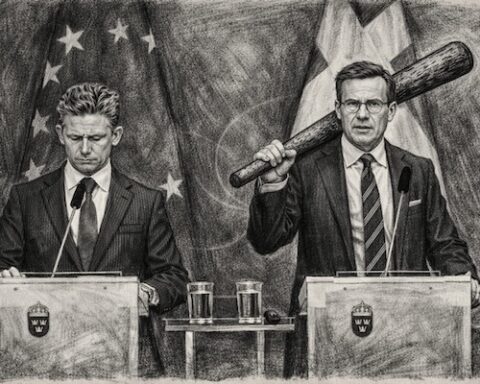
By remaining outside the escalation chain, Europe reduces its immediate exposure and preserves its freedom of manoeuvre. More importantly, it allows the United States to absorb the costs associated with systemic disruption. The mechanism is indirect but effective. If one actor assumes ownership of escalation, that actor also accumulates the consequences of failure, miscalculation, or spillover.
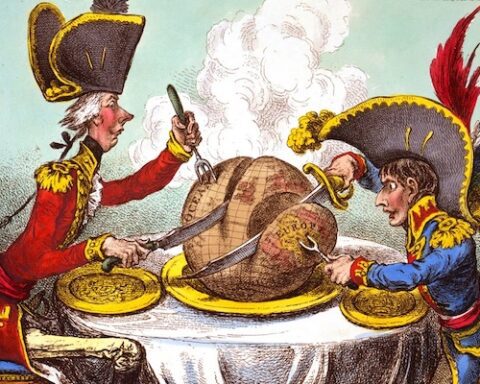
The attraction of this approach lies in its asymmetry. Europe does not need to act in order to shape the outcome. It needs only to refrain from acting in ways that would distribute responsibility more evenly. In doing so, it allows another actor to carry both the burden of escalation and the liability of its effects. The formulation is inelegant but precise: Europe gives the United States enough rope to hang itself, and the outcome follows from Washington’s own decisions.
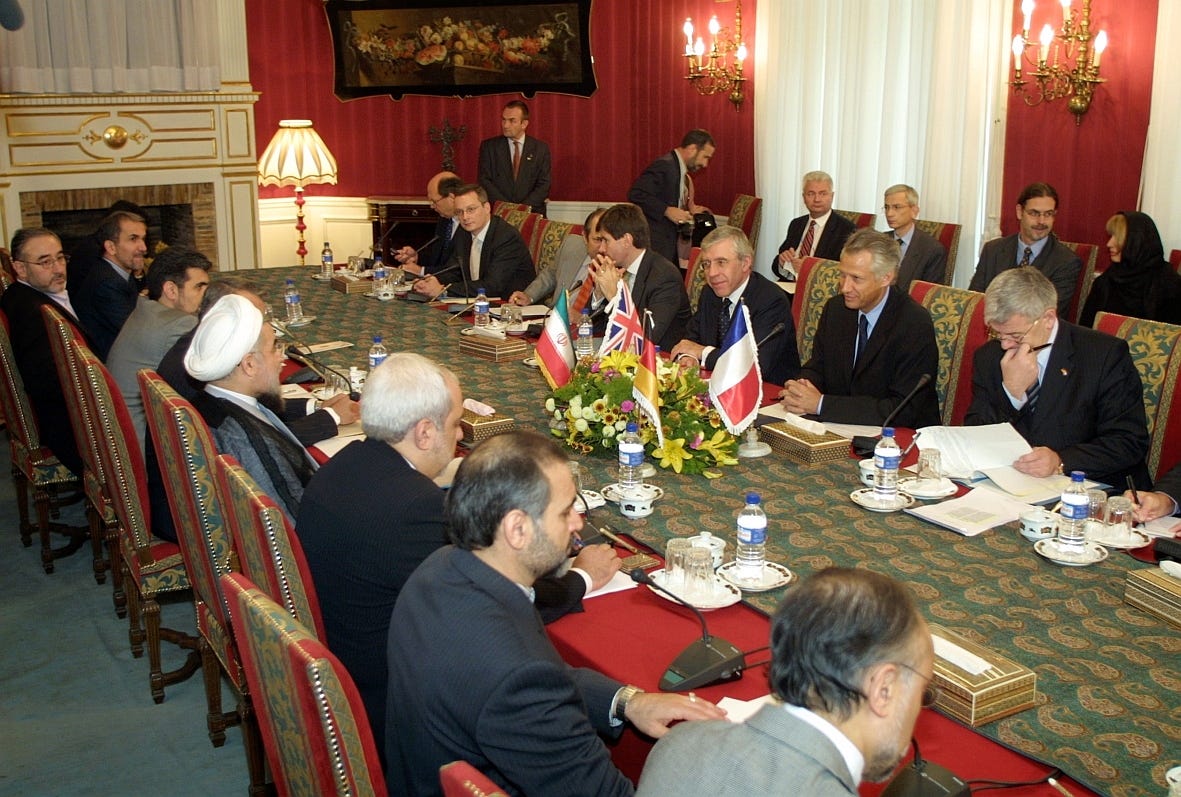
Whether this reflects a coordinated strategy or convergent behaviour is, at this stage, secondary. No central coordination is required for this to function. Alignment of incentives is sufficient. The E3 — the United Kingdom, France, and Germany —can act as sovereign states and still produce a coherent strategic outcome without operating as a unified entity. In practice, within the European system, meaningful military action rarely materialises unless at least two of the three E3 actors align, typically with tacit support from Brussels secured through prior informal consultation. This does not constitute formal coordination, but it does create a de facto threshold for action. The incentive for such a posture is clear; the intent is less so. It remains less clear whether the intent does. Whether this posture is intentional or emergent is less important than the fact that the incentive structure makes it rational.
The mechanism itself is sequential. Escalation produces systemic disruption. Systemic disruption imposes global economic cost. That cost degrades perceived reliability. Reduced reliability increases the transaction cost of engagement for partners. As transaction costs rise, relative advantage shifts to actors not directly associated with the disruption. Europe, by remaining outside the chain of causation, is positioned to benefit from that shift.
Whether this reflects an intentional line held by the E3 together with Brussels, or a looser convergence of national positions is difficult to determine. In European practice, these distinctions often collapse in effect. When the E3 and Brussels move in parallel, even without explicit coordination, the result is a form of emergent consensus — a de facto strategic posture produced by alignment of interests rather than formal design.
This restraint carries additional advantages. By controlling whether and when to act, Europe does not merely preserve flexibility; it acquires leverage over both timing and narrative. It can choose when to enter, under what conditions, and with which actors, positioning itself as mediator only once the costs of escalation have become clear. At the same time, narrative space remains unclaimed. If Washington is associated with escalation and Iran with disruption, the roles of initiator and saboteur begin to settle. Europe, by contrast, remains available to define the terms of engagement ex post. Non-participation, in this sense, is not passivity. It is a method of allowing events to structure both perception and opportunity in Europe’s favour.
In such an environment, the number of viable arbiters is limited. The United States, as a primary actor, cannot credibly fill that role. Iran, as a direct participant, is similarly constrained. This leaves a narrow field in which Europe — and to a lesser extent China — can position themselves as alternative intermediaries. That positioning, in turn, reinforces claims to strategic autonomy, not through declaration, but through function.
In this environment, third actors adjust their behaviour accordingly. China does not need to realign itself strategically with Europe. It needs only to find the United States less predictable, more costly, and more difficult to engage with under conditions of compounded escalation. Much of the Middle East operates under a similar logic. Trust is not required. Relative positioning is sufficient.
For energy-dependent powers such as India and the GCC states, the escalating transaction costs of relying on a volatile American security umbrella are beginning to create the conditions for a quiet pivot toward Brussels, in search of a de facto maritime partnership that prioritises systemic stability over kinetic confrontation. The March 5 EU–GCC Ministerial Meeting and the conclusion of the EU–India FTA in January 2026 serve as early mechanical indicators of this trajectory. While Washington remains focused on the ultimatum and the “kinetic chain”, Brussels has been consolidating the trade and regulatory frameworks that allow these actors to drift from the US orbit without falling into a vacuum. Should these powers begin to formally bypass Washington in favour of European-led maritime or diplomatic arrangements for their energy security, the transition of Europe from a passive observer to a primary arbiter of global trade stability will be functionally complete.
There is a cost to this positioning. Elevated energy prices benefit Russia and increase pressure on Ukraine. Economic slowdown will affect European economies alongside others. This is not a cost-free posture. It is a trade-off in which near-term instability is accepted in exchange for potential shifts in relative influence.
The potential gain is the gradual reduction of American leverage within areas where Europe seeks greater strategic autonomy. Not rupture, and not disengagement, but recalibration. Influence is not removed; it is diluted.
The model is therefore conditional.
If escalation proceeds and the energy system destabilises, and if Europe maintains sufficient distance while remaining diplomatically engaged, then a relative shift in positioning becomes plausible. If escalation is contained, or if Europe is drawn into the chain of responsibility, the effect diminishes accordingly. If Iranian retaliation remains limited or symbolic, the systemic shock may not materialise at scale, reducing the magnitude of any relative gain. Conversely, if alliance dynamics compel European involvement, the distinction between participant and observer collapses, and with it the asymmetry on which the model depends.
This is not a moral judgement. It is an assessment of incentives, mechanisms, and probable effects under current conditions.
Is Europe acting, or is Europe allowing the system to act on its behalf?
Author’s note: A 20260323 assessment update note, reflecting the announcement of measured European involvement, is available here.
UPDATE [MAR. 23, 2026]:
Recent statements from NATO Secretary General Mark Rutte [1, 2] suggest that up to 22 countries, including several European states, are ready to help secure shipping through the Strait of Hormuz. This is, at least in part, a US-led attempt to spread both operational burden and political ownership. In practice, however, “opening” the Strait is less about physically clearing it and more about restoring confidence. If ships and insurers still see risk, traffic will not return. You can project force. You cannot project insurance premiums.
At a purely technical level, the Strait is almost impossible to “close” in a clean sense—but equally difficult to “open” once risk perception takes hold. A drone in the wrong place, an incident at the wrong time, and traffic stops. Insurance companies and commercial operators simply cannot function under those conditions. Yes, the Strait may be “open” in a military sense, but that is a far cry from a commercially permissible environment. (One does wonder what is being smoked in some briefings.)
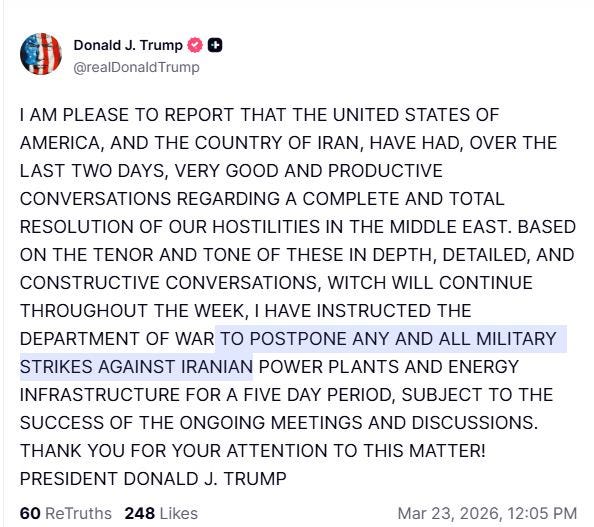
This does not disprove the original hypothesis, but places it under active test. It also creates space for a narrative pivot in Washington. If the Strait can be presented as “reopened” through collective action, the focus shifts from the credibility of the original ultimatum to the success of the response. In that framing, the missed deadline becomes secondary. What matters is that the situation appears stabilised, and that the United States can claim to have compelled movement—regardless of whether underlying conditions have materially changed. At the same time, the introduction of primarily European actors provides a convenient distribution of responsibility. Any continued disruption can be attributed to insufficient follow-through by other actors, reinforcing a narrative in which the United States leads while others underperform. This dynamic is no longer theoretical. The announced postponement of strikes, framed as the result of “productive conversations”, reflects precisely this shift—from deadline enforcement to outcome framing.
The key question is how far Europe gets pulled in. Limited involvement—focused on protecting shipping—allows Europe to reduce immediate economic exposure while maintaining some distance from the escalation itself. Full involvement would remove that distance and tie Europe to the same political and economic costs as the United States.
There is also a more prosaic layer. Europe is economically exposed to disruption in the Strait. Reopening traffic, even partially, is in its immediate interest. At the same time, there are other considerations in play: maintaining US engagement elsewhere, managing other actors’ expectations, and not least, navigating an election season across multiple European states. These are rarely articulated, but they shape behaviour.
The incentives themselves remain unchanged. Europe has much to gain from staying out of the escalation chain, and less than assumed to gain from deep involvement. The United States, facing pressure to act, has a clear interest in distributing both risk and responsibility across participating states. What we may be seeing is not a coordinated strategy, but a negotiated equilibrium—partial engagement without full ownership.
The hypothesis stands. But its strength will now be determined by a simple question: how far does Europe allow itself to be drawn into a chain it has, so far, had good reason to remain adjacent to?
John Sjoholm, for LIMA CHARLIE WORLD
[Subscribe to our newsletter for free and be the first to get Lima Charlie World updates delivered right to your inbox.]
John Sjoholm is Lima Charlie’s Middle East Bureau Chief, Managing Editor, and founder of the consulting firm Erudite Group. A seasoned expert on the Middle East, North Africa, Europe and the Balkans, he has a background in security contracting and has served as a geopolitical advisor to regional leaders. He was educated in religion and languages in Sana’a, Yemen, and Cairo, Egypt, and has lived in the region since 2005, contributing to numerous Western-supported stabilisation projects. He currently resides in Jordan.
Lima Charlie World provides global news, featuring insight & analysis by military veterans, intelligence professionals and foreign policy experts Worldwide.
For up-to-date news, please follow us on twitter at @LimaCharlieNews
In case you missed it: